
Use a measurement-first zone system: cull surplus linens, measure your shelves, assign three reach zones, then buy containers sized to fit. Expect one to three hours for a standard closet, with shelf bands around 36–60 inches for daily items and everything else stacked above or below. If a professional rebuild ever makes sense, a company like Classy Closets can rework the whole footprint. Start tonight by emptying just one shelf.
TL;DR:
Measuring shelf depth and creating designated reach zones are essential to choosing containers that will fit and prevent clutter or wasted space.
Maintaining a lean inventory of two to four sheet sets per bed and towels per person helps maximize storage efficiency in your linen closet.
Folding towels and sheets to fit precisely within measured depths, and stacking items in narrow columns, reduces sliding and avalanche risks.
Using clear, appropriately sized bins and adding risers or dividers optimizes vertical space and makes accessing stored items easier.
When a closet features irregular walls or persistent organization issues, professional design and installation can deliver tailored solutions backed by a long-term warranty.
Table of Contents
How Do You Declutter a Linen Closet Before Organizing It?
Skip the bin shopping until you know what’s actually staying. Pull everything out onto a bed or table, then sort into three piles: keep, donate, and rag pile (worn towels and sheets make excellent cleaning rags, not landfill).
A lean inventory is what makes the whole system work. Organizing experts commonly recommend two to four sheet sets per bed and two to four towels per person as a workable baseline. Anything past that is usually just taking up shelf space you need for something else.
-
Empty the closet completely so you can see every shelf edge.
-
Sort into keep, donate, and rag pile as you go, no “maybe” pile allowed.
-
Pull out anything that doesn’t belong: medicine, gift wrap, luggage, and holiday decor all tend to migrate into linen closets and crowd out the linens themselves.
-
Consolidate guest linens into one labeled basket instead of letting them spread across three shelves.
That single basket rule alone solves a surprising amount of overstock. Once guests have their own contained zone, you stop buying “just in case” extras.
Measuring Your Shelves and Mapping Reach Zones
Grab a tape measure before you grab a shopping cart. Measure the usable depth from the back wall to the front edge of each shelf, not the closet door opening, since that one distinction is what causes most container returns. Record the interior width at the back of the shelf, and note the vertical gap to the shelf above.
Write down five numbers per shelf: width, usable depth, gap above, gap below, and whether the shelf is fixed or adjustable. Do this for an empty shelf first, before anything goes back in.
Then map three zones:
-
Zone 1 (36 to 60 inches from the floor): daily items, everyday towels, the sheet set currently in rotation.
-
Zone 2 (above eye level): weekly-use items, extra pillowcases, table linens.
-
Zone 3 (top shelf and floor): seasonal and bulky items, spare comforters, holiday linens.
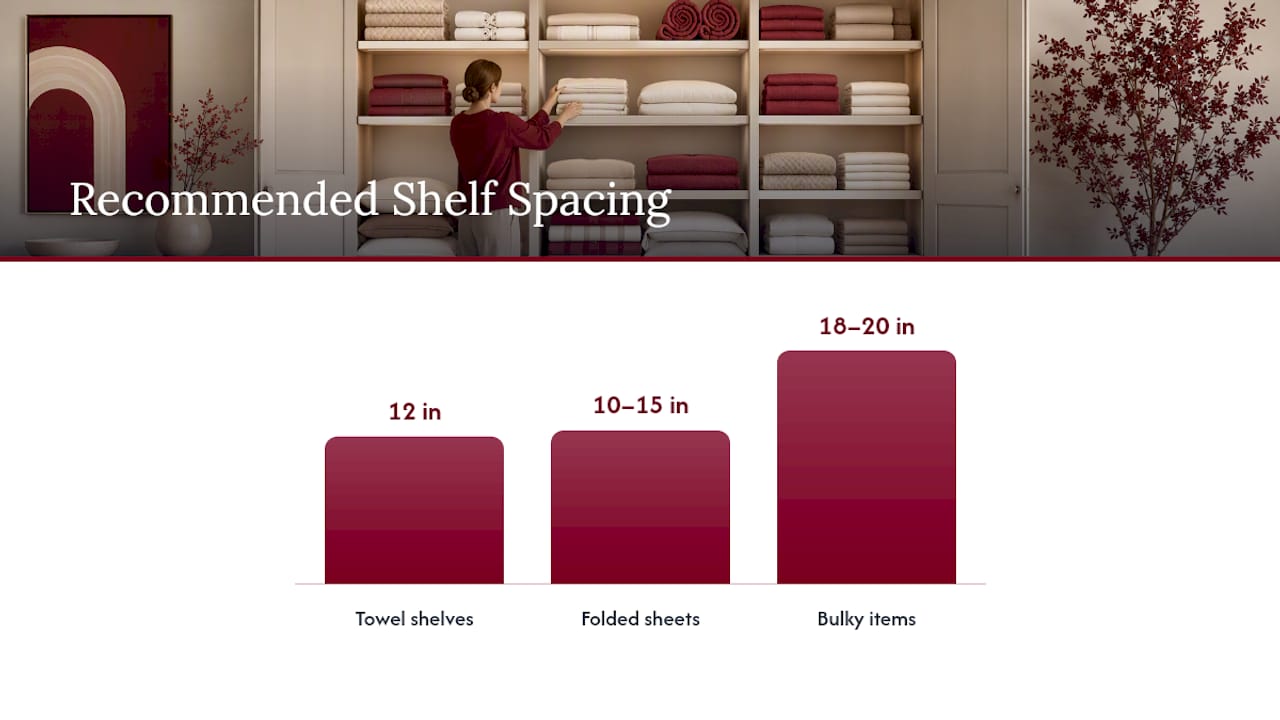
Vertical spacing matters as much as the zone. Published guidance puts towel shelves around 12 inches apart, folded sheets at 10 to 15 inches, and bulky items like comforters at 18 to 20 inches, with roughly 20 percent of each shelf left empty for airflow.
Folding and Stacking Methods That Match Your Shelf Depth
Folding to a fixed depth, rather than folding by habit, is what keeps stacks from sliding. Once you know your usable depth from the measuring step, fold every towel to fit inside that number, not past it.
-
Fold bath towels in thirds lengthwise, then fold in half or thirds crosswise until the finished rectangle sits within your recorded depth.
-
Use the file fold for wash cloths and hand towels: stand them on edge rather than stacking flat, so you can see and grab each one.
-
Pocket a full sheet set inside one folded pillowcase so a set never gets separated across the shelf.
-
Roll bulky items like extra blankets instead of folding, since rolling tends to survive shelf vibration better than flat stacks.
Keep stacks in two to three narrow columns rather than one wide pile. Placing items front to back, tallest at the back, stops the classic avalanche when someone grabs a towel from the middle.
Choosing Bins, Baskets, Dividers, and Risers That Fit
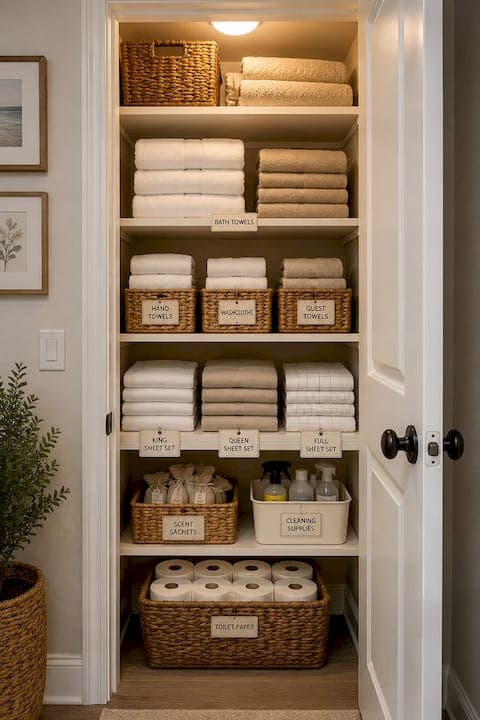
Clear low tubs work best on deep shelves because you can see contents without pulling the bin out. Natural fiber baskets breathe better for everyday linens, and sealed plastic should be reserved for items you rarely touch, like off-season bedding, since trapped moisture is a real risk on daily-use shelves.
-
Sizing rule: container depth should be chosen slightly less than your measured usable shelf depth to ensure fit, with roughly a half inch of clearance between neighboring bins.
-
Dividers keep folded columns from leaning into each other.
-
Risers recover the dead vertical space above a short stack, effectively adding a half shelf where none existed.
-
Slide-out bins on deep shelves stop items at the back from disappearing for months.
Pro Tip: Buy one container first, test the fit for a week, then order the rest. A single wasted bin is cheap; a dozen mismatched ones are not.
Small-Space Fixes for Narrow or Deep Linen Closets
Not every fix requires a saw. Measure first, then decide whether a bracket-mounted extra shelf will actually clear the door trim or an existing fixture.
-
Freestanding risers create a second tier on an existing shelf without any installation.
-
Over-the-door organizers hold hand towels, sachets, or small toiletries that otherwise clutter a shelf edge.
-
Slim hanging shelves fit the narrow gap next to a door hinge that usually goes to waste.
-
On deep shelves, use a front row and back row system, or add a lazy Susan for small items so nothing gets permanently lost at the back.
-
Clear low bins on the floor of a deep closet let you pull an entire category forward at once.
A Maintenance Routine That Actually Sticks
Three simple intervals keep the system from unraveling. After laundry, spend two minutes returning folded items to their zone instead of stacking wherever there’s room. Quarterly, wipe down shelves and rotate stock so nothing sits untouched at the bottom for a year.
-
Weekly reset: put laundry back in its zone immediately, not “later.”
-
Quarterly pass: wipe shelves, rotate older linens to the front, check for damp spots.
-
Annual cull: revisit the two to four sets per bed guideline and donate the overflow.
Leave about 20 percent of each shelf empty and never store a linen that isn’t fully dry; trapped moisture is the fastest way to musty towels. Label each zone clearly so anyone in the house can put things back correctly.
Pro Tip: Tape a small label inside the door listing each zone’s contents. It takes five minutes and it’s the difference between a system that lasts a year and one that collapses in a month.
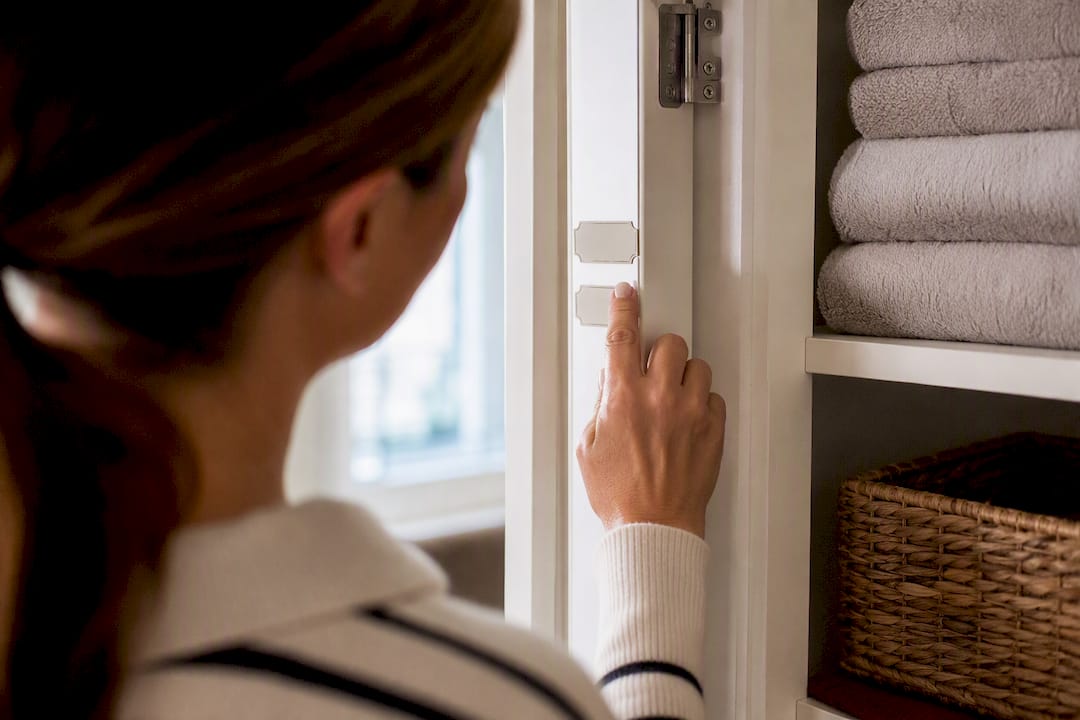
When a Custom Closet Solution Makes Sense
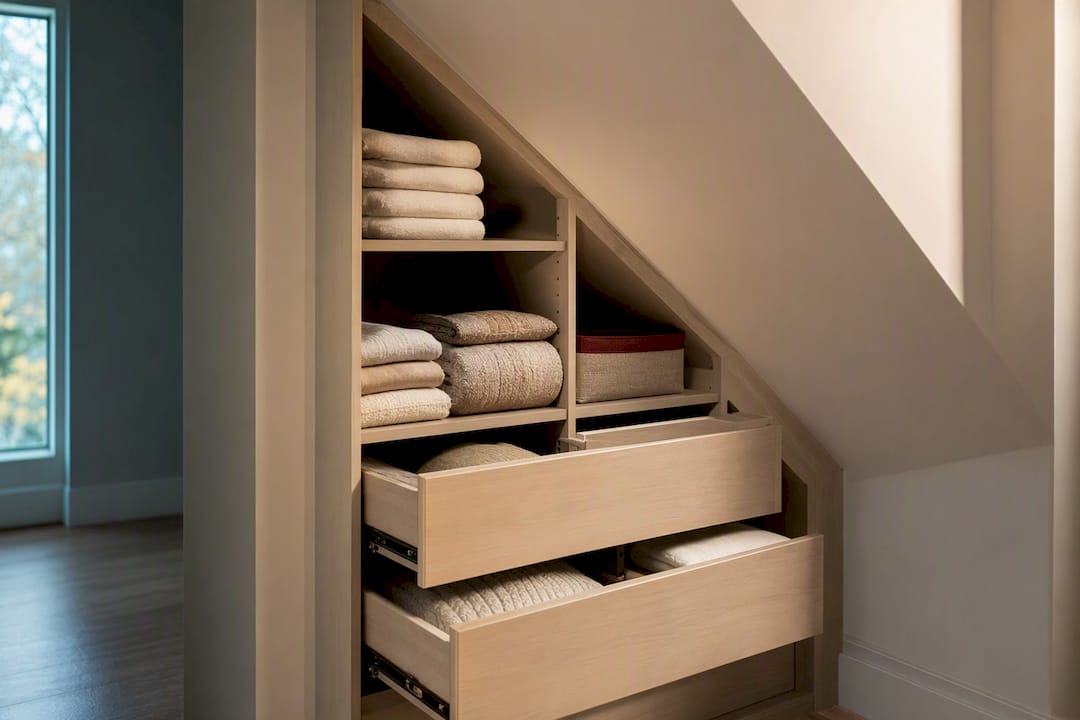
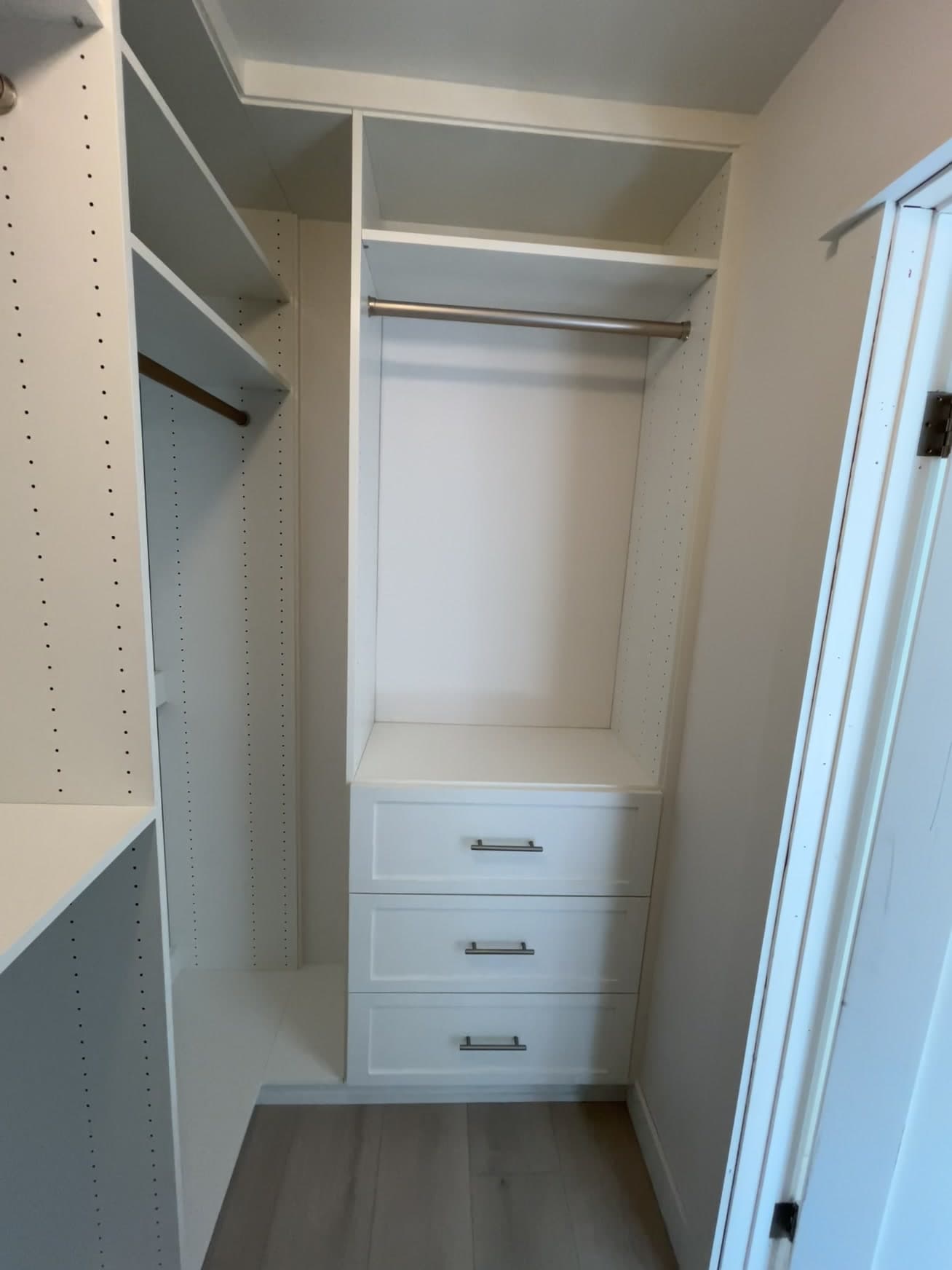
A weekend of decluttering and measuring solves most linen closets. It doesn’t solve everything. Sloped ceilings, oddly angled walls, or a closet that needs built-in slide-outs to actually work are jobs for a professional, especially after a second or third DIY attempt hasn’t held up.
Classy Closets designs each project in 3D around your exact measurements, manufactures locally, and installs with its own crew rather than subcontractors, backed by a 10-year workmanship warranty. Pricing is itemized and quoted up front, and consultations are free.
Before that consultation, bring:
-
Your recorded usable shelf numbers from the measuring step above.
-
A few photos of the closet as it sits now.
-
Your top two or three priorities, whether that’s more sheet storage, better airflow, or hiding an awkward pipe or vent.
Why Measurement Beats Matching Bins
Pretty matching bins photograph well and solve nothing if they don’t fit the shelf. The homeowners who keep a tidy linen closet past month one are the ones who measured first and made real decisions about what to keep, not the ones with the nicest labels.
Staged closet photos are aspirational, not a blueprint. Function beats symmetry every time you actually need a towel at 7 a.m.
— Gary Pavitt
Get a Free Design Consultation for Your Closet
Classy Closets is the alternative to guessing your way through a linen closet rebuild: instead of buying containers and hoping they fit, you get a 3D design built around your exact measurements before anything is manufactured.

That matters most when a closet has angled walls, low headroom, or a layout no off-the-shelf shelving kit was ever designed for. Classy Closets designs, manufactures, and installs with its own crew, itemizes pricing up front, and backs the work with a 10-year workmanship warranty. If your closet needs more than a shelf reset, the smart next step is a free in-home consultation, where a designer measures the space and shows you a 3D layout before you commit to anything.
Where to Learn More About Linen Closet Systems
For more measurement and layout guidance, HGTV covers zone-based organizing ideas, The Spruce offers small-closet folding and labeling tips, and Wirecutter breaks down realistic linen inventory counts.
Sources
-
Linen closet organization: shelf depth and spacing guidance (Quiet Minimal)
-
How to organize a linen closet (Wirecutter / The New York Times)
FAQ
How Many Towels Should I Keep in My Linen Closet?
A workable guideline is two to four towels per person, plus a small labeled stack for guests. Beyond that, towels usually just sit unused and eat up shelf space.
What Is the Point of a Linen Closet?
A linen closet centralizes bedding, towels, and household linens in one place so they’re easy to find and rotate. Its function depends on zoning: daily items at reach height, seasonal items on the top or bottom shelves.
How Much Space Should Be Between Shelves in a Linen Closet?
Aim for about 12 inches for towels, 10 to 15 inches for folded sheets, and 18 to 20 inches for bulky items like comforters and spare pillows. Leaving roughly 20 percent of each shelf empty also helps airflow and prevents mustiness.
Should I Buy Containers Before or After Measuring My Shelves?
Always measure first. Container depth should equal your usable shelf depth minus one inch, so buying bins before measuring is the most common cause of returns.
When Should I Hire a Professional Instead of DIY Organizing?
Consider a custom solution when the closet has angled walls, low headroom, or has failed multiple DIY attempts. Classy Closets offers a free 3D design consultation for exactly these cases.