
The best guest room office combo starts with one decision: which function is primary. Pick a bed that matches how often you actually host (Murphy bed for frequent guests, daybed for occasional, sofa bed for rare), then use lighting and storage to make the secondary function disappear when it’s not needed. A professional build, like the custom Murphy bed and storage systems from Classy Closets, handles the hard parts of that transformation.
TL;DR:
- Investing in a Murphy bed is ideal if you host more than a dozen nights per year, as it folds away quickly and can incorporate a desk.
- For moderate hosting, a daybed with trundle offers a balance between comfort and cost, suitable for about one weekend a month.
- Separate storage zones and cable management are critical to prevent clutter and ensure quick room transformations between work and guest modes.
- Lighting should be controllable with separate switches or smart plugs, using cooler light for work and warmer tones for guests to signal mode changes.
- Professional installation of custom-built-in systems ensures safety, perfect fit, and functional separation, especially when installing Murphy beds or cabinetry.
Table of Contents
- How to Map Your Guest Room Office Combo Layout
- Bed and Desk Choices Matched to Guest Frequency
- Lighting and Power Setups That Switch Modes
- Storage and Cable Management for a Guest-Ready Room
- What Actually Makes a Guest Comfortable Overnight
- The Changeover Checklist: From Desk to Bed in Minutes
- How a Custom Built-In Solves the Hard Parts
- The Real Trade-Off Nobody Tells You About
- Get a Custom Guest Room Office Combo Built Right
- Sources
- FAQ
How to Map Your Guest Room Office Combo Layout
Before you buy anything, decide which job the room does most: work five days a week, or host guests four nights a year? That answer dictates everything else, from furniture scale to wall color to how much you’re willing to spend on soundproofing.
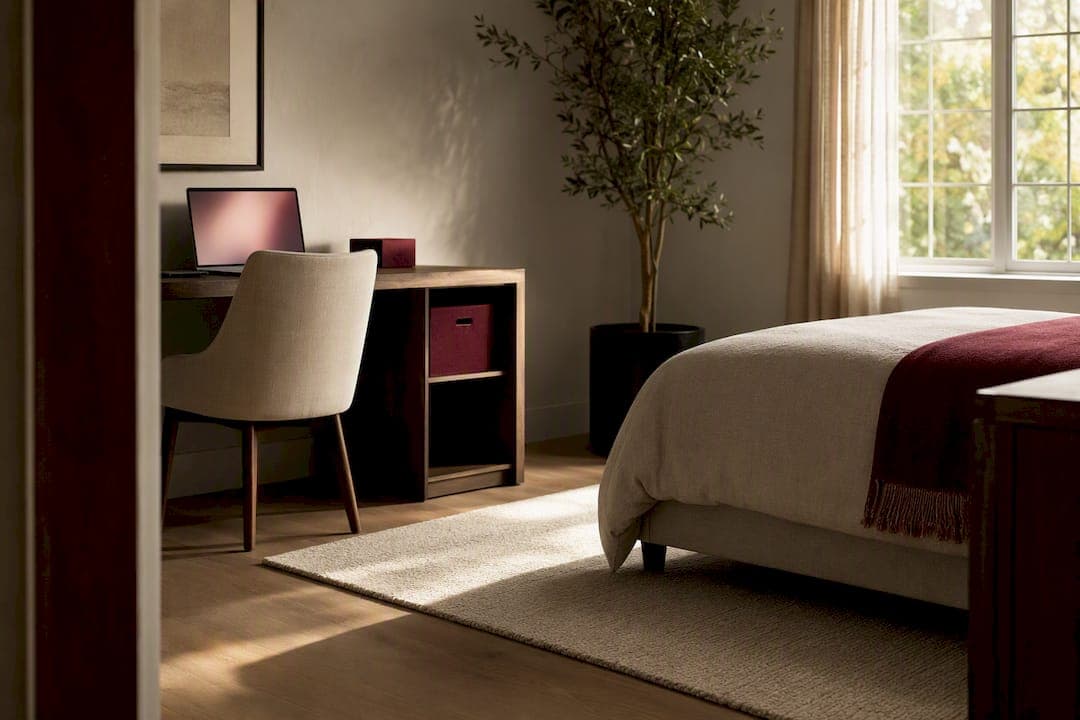
Once you know the primary function, placement gets easier. The desk belongs on the wall with the best natural light, ideally facing or beside a window rather than staring into it, since daylight keeps you alert during long work sessions. The bed goes on a quieter, less-lit wall. That’s not just a design preference. The Spruce’s guidance on office guest room layouts specifically recommends keeping the desk on the daylight wall and treating the bed as the secondary occupant of that light.
Visual separation matters more than square footage. A few tools do the job without a wall:
- Open shelving as a half-height divider, useful when you want airflow and light to pass through.
- Curtains on a ceiling track, which close off the sleeping zone in seconds and disappear when not needed.
- A rug pair, one under the desk and one under the bed, which signals “two rooms” even in one footprint.
Leave a clear path from the door to the bed and closet that’s wide enough for a rolling suitcase. Guests navigating a desk chair and a monitor arm at midnight is not the hospitality experience you’re after.
Pro Tip: Test your zoning with masking tape on the floor before you buy furniture. Mark out the desk footprint, the bed footprint, and a 30-inch walking path between them. If the tape lines overlap, your furniture will too.
Bed and Desk Choices Matched to Guest Frequency
Think of it as a changeover clock: the more nights per year you host, the more you should invest in a bed that converts fast and disappears completely during work hours. Rare guests can tolerate a slower, clunkier setup. Frequent guests can’t.
- Murphy bed (wall bed): Best for hosting more than a dozen nights a year. Folds flat against the wall in under a minute once installed, and a built-in version can incorporate a desk right into the cabinetry. Installation guides note these units need anchoring to wall studs and often require professional installers, so this isn’t a weekend DIY project for most homeowners.
- Daybed with trundle: A solid middle ground. It reads as a sofa during the day, pulls out a second mattress in seconds, and costs less than built-in joinery. Good for moderate hosting, maybe one weekend a month.
- Sofa bed or rollaway: The budget option for rare guests. The trade-off is mattress quality. Most pull-out sofa mattresses are thin and hit a metal bar wrong at 2 a.m. A rollaway with a real innerspring or foam mattress is often more comfortable despite looking less permanent.
For the desk, skip the folding wall desk that everyone recommends for tiny spaces. A shallow, fixed desk (18 to 24 inches deep) gives you real working surface without the daily setup tax. Real-world combo rooms shown in design portfolios consistently favor built-in desks paired with wall beds over furniture that needs to be assembled and disassembled each time.
Lighting and Power Setups That Switch Modes
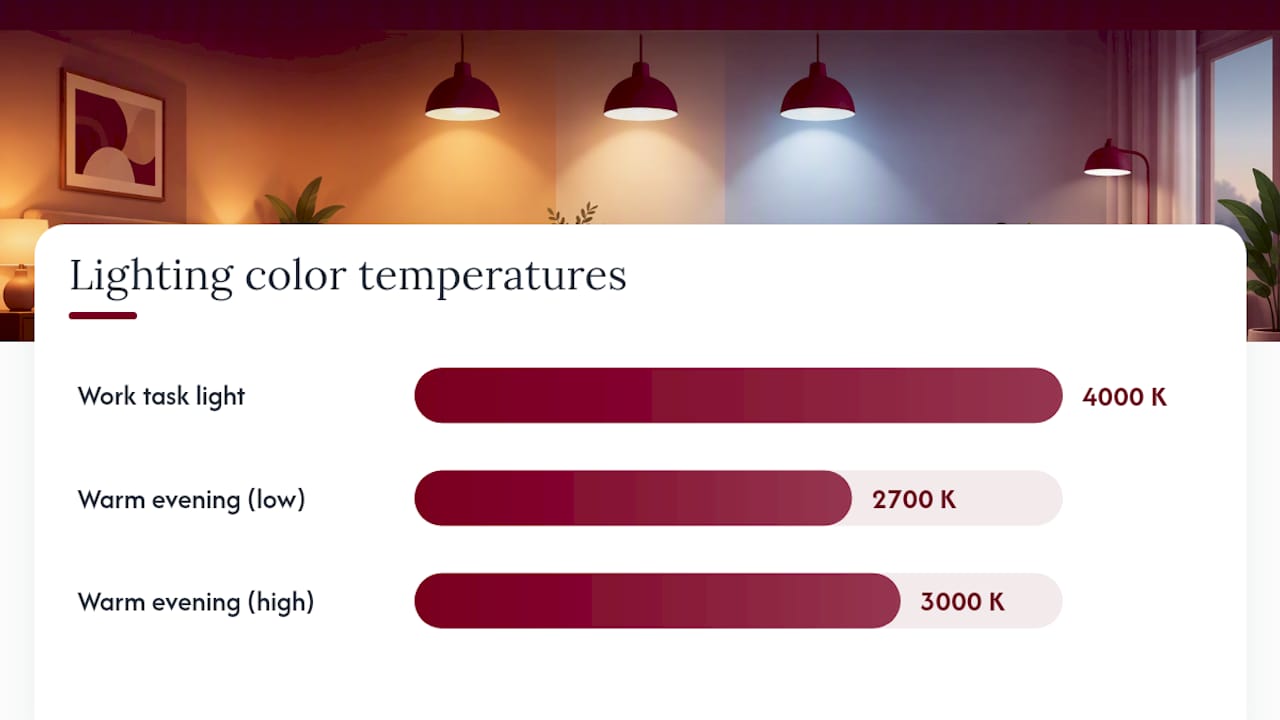
Work and sleep need different light, and trying to use one fixture for both is why most combo rooms feel like neither a good office nor a good bedroom. Task lighting around 4000K (a cooler, whiter light) keeps you alert at the desk. Warm 2700K to 3000K lighting in the evening signals wind-down for guests.
The fix is control, not more fixtures:
- Wire the desk lamp and bedside lamp to separate switches, or use smart plugs on separate scenes labeled “Work” and “Guest.”
- Add a dimmer to the overhead fixture so it can go from bright task light to soft ambient in one turn.
- Give the bed its own reading lamp within arm’s reach, plus a blackout curtain or shade so guests aren’t waking up to your monitor glow.
- Route charging where it’s actually needed: a hidden power strip under the desk, and a bedside outlet or USB port within reach of the pillow.
Pro Tip: Buy one smart plug before you buy anything else in this section. A single $15 smart plug that switches your desk lamp off and your bedside lamp on with one tap does more for the “mode switch” feeling than any amount of new furniture.
Storage and Cable Management for a Guest-Ready Room
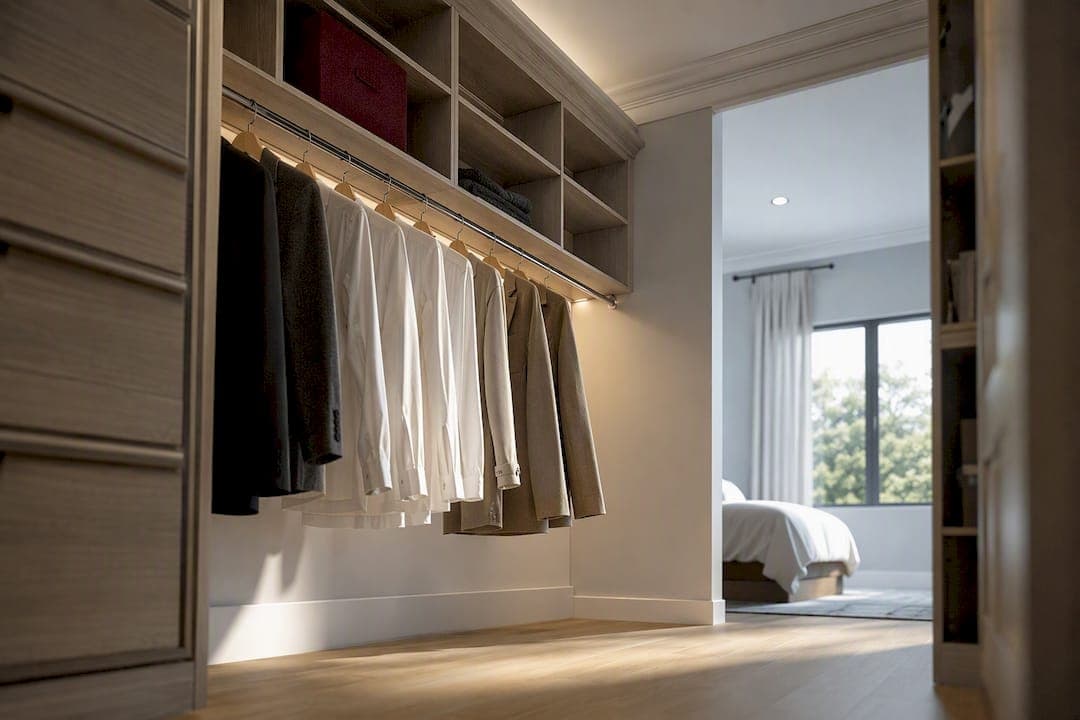
Storage is where most combo rooms fall apart, because office supplies and guest linens end up fighting for the same drawer. Split the closet and any built-in cabinetry into two distinct zones from day one: office side (files, cables, supplies) and guest side (a clear rail, spare hangers, extra pillow and blanket).
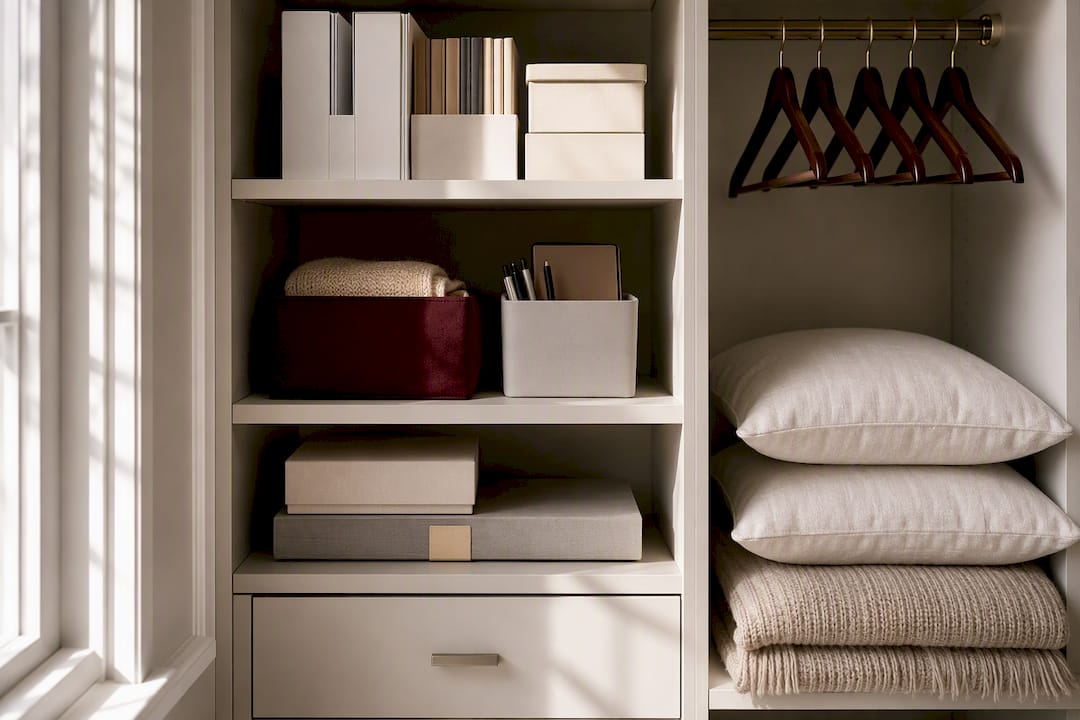
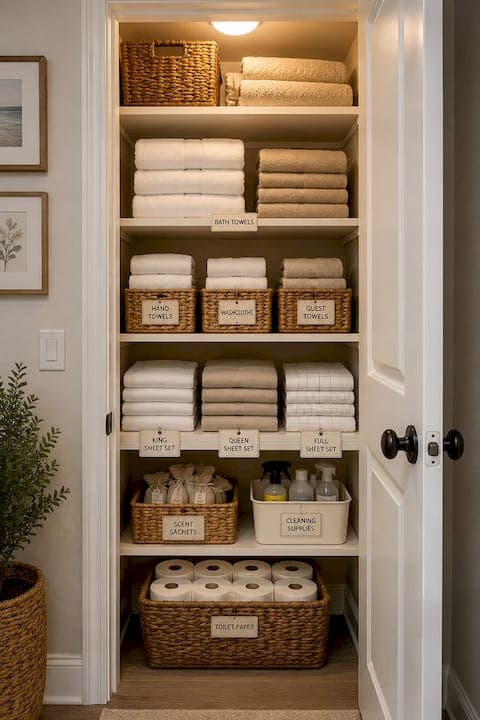
Leave one dedicated shelf and a few empty hangers reserved permanently for guests, not “whatever’s free that week.” Label drawers if more than one person uses the room, and store an under-bed or under-shelf suitcase rack so bags aren’t parked in the walking path.
Cables are the other silent room killer. Desks built with integrated cable channels or grommets tied to a hidden power strip keep monitor cords, chargers, and surge protectors out of sight, which matters more than most people expect. Guests notice a tangle of cords under a desk even when they’re not looking for it, and it reads as improvised rather than intentional.
| Storage element | Office use | Guest use |
|---|---|---|
| Closet rail | Hanging jackets, work bags | Reserved empty section for guest clothes |
| Built-in drawers | Files, cables, chargers | Spare linens, towels |
| Under-bed storage | Off-season supplies | Extra pillows, blanket |
| Ottoman or bench | Footrest during work | Luggage stand at night |
Furniture with hidden storage, like an ottoman that opens or a bench with a lift lid, earns its keep in a room this small. It’s seating during the day and a luggage rack at night.
What Actually Makes a Guest Comfortable Overnight
A great desk setup means nothing if the bed is a punishment. If you host more than a handful of nights a year, put real money into the mattress, not the frame. A thin foldout pad might work for one night; it will not work for three, and word travels fast among houseguests.
Keep a short list of bedside basics stocked and ready, not scrambled together the night someone arrives:
- A working lamp within reach of the pillow.
- A charger or USB outlet, so guests aren’t hunting for an outlet behind the desk.
- A glass or small carafe of water.
- Fresh towels and the Wi-Fi password, written down, not verbally rattled off at 11 p.m.
During the day, style the bed like a sofa: bolster pillows, a folded throw, no exposed sheets. At night, it should take under a minute to strip back to an actual bed. A good mattress topper and one genuinely good pillow are small investments that change how a guest remembers the stay far more than a new lamp or a fresh coat of paint.
The Changeover Checklist: From Desk to Bed in Minutes
Here’s the routine that actually works under time pressure, in order:
- Close laptop, coil cords into the hidden power strip or under-desk channel.
- Clear desk surface into a drawer or tray, not a pile.
- Switch lighting scene from “Work” to “Guest” (smart plug or dual switch).
- Pull out or unfold the bed; add the topper if it’s stored separately.
- Add linens kept reserved specifically for guests, never borrowed from daily stock.
- Set out bedside basics: lamp on, charger plugged in, water poured.
Practical guidance on room conversions suggests aiming for under five minutes for the ideal changeover, with anything past fifteen minutes signaling the furniture choice isn’t working for how often you host. If your routine consistently runs long, the fix usually isn’t more effort. It’s the wrong bed type for your hosting frequency.
Pro Tip: Keep a fitted sheet permanently on the guest mattress, even when it’s folded away as a sofa. That alone can cut two minutes off every changeover.
How a Custom Built-In Solves the Hard Parts
Precision is where DIY combo rooms usually lose. A 3D-designed built-in fits the exact wall dimensions, conceals cables inside the cabinetry, and gives guest storage its own labeled compartment instead of a shared drawer. That precision also solves the safety question: Murphy beds need to be anchored into wall studs and inspected periodically for worn mounting hardware, and installation manuals specifically call out consulting a professional when wall type is uncertain.
Some companies design these systems in 3D, manufacture them locally, and install with their own crews, often offering warranties and free consultations before any commitment.
The Real Trade-Off Nobody Tells You About
Every guest room office combo forces a choice between permanence and flexibility, and most guides dodge saying which one wins. It doesn’t. Pick your primary function first, use the changeover clock to size the furniture, and lean toward guest comfort only if hosting is frequent enough to matter. For anything involving a Murphy bed or built-in cabinetry, get a professional to handle the install.
— Gary Pavitt
Get a Custom Guest Room Office Combo Built Right
Certain providers can turn the planning in this guide into a physical room, reducing guesswork about anchoring or mismatched furniture. They may offer free in-home 3D design consultations, itemized pricing upfront, and use their own installation crews rather than subcontractors, often backed by a workmanship warranty.
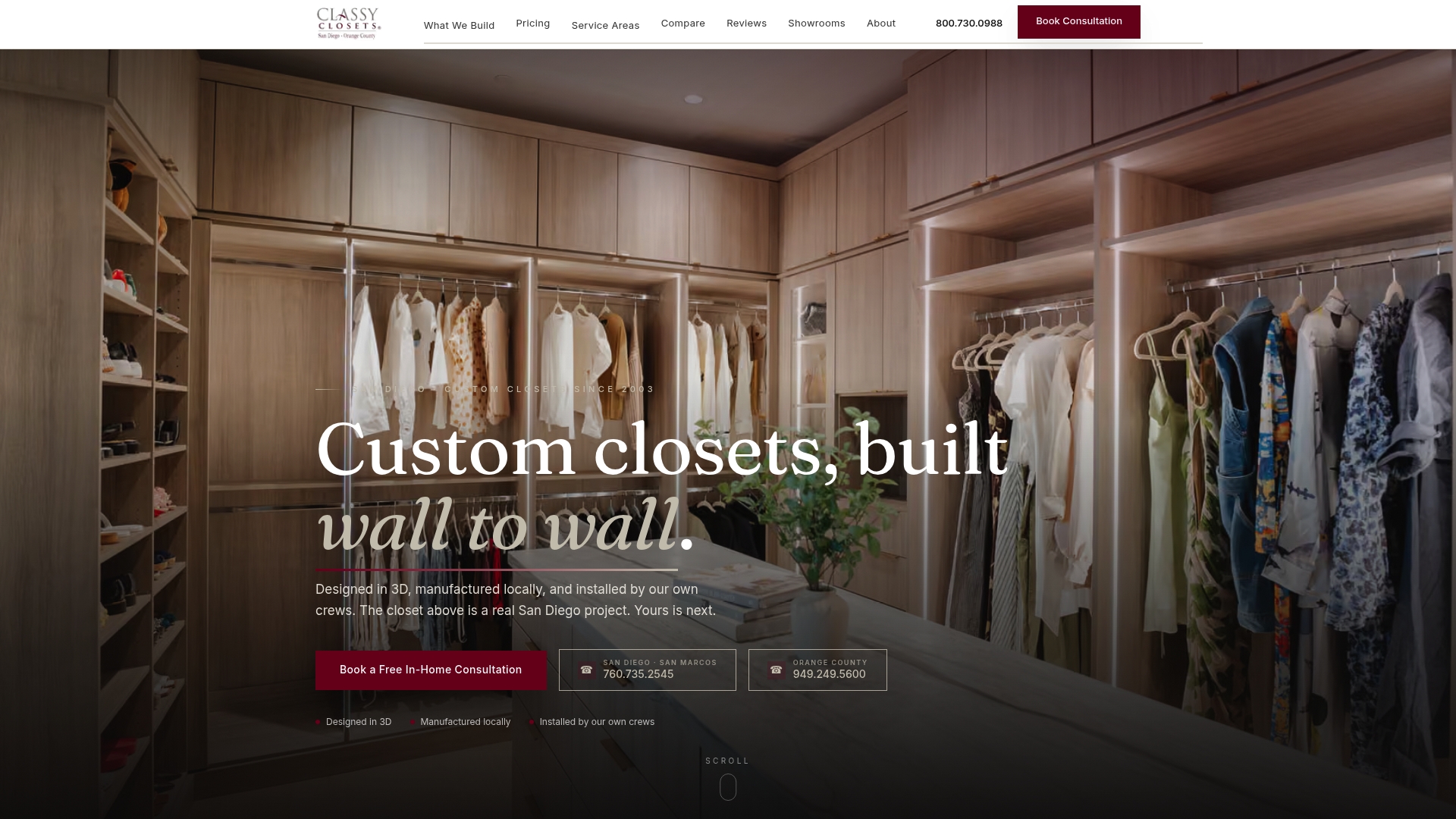
If a wall bed is part of your plan, the Murphy and wall bed line starts at $2,900 and includes the structural anchoring that manuals warn is critical for safety. For rooms that need dedicated guest storage alongside office space, the home office built-in system integrates cable channels and separate compartments so work gear and linens never compete for the same shelf. Book a free consultation, get exact room measurements taken, and review a 3D plan before any cabinet gets cut.
Sources
- Office guest room ideas — The Spruce
- Murphy bed product/installation PDF (Lowe’s)
- Cable-management feature guidance — RC Willey
FAQ
What are some ideas for a guest bedroom and office combo?
Zone the desk on the brightest wall and the bed on a quieter one, then separate the two with a rug pair, open shelving, or a curtain track. Reserve a labeled shelf and empty closet rail specifically for guests so storage never becomes a shared, cluttered mess.
How do I turn a guest room into an office?
Start by deciding whether the room’s primary job is work or hosting, since that decision shapes everything from furniture to lighting. If guests are occasional, add a fixed desk near natural light and keep the existing bed; if hosting is frequent, consider a Murphy bed built into the wall so the desk area stays permanent and workable every day.
What are good guest bed options for an office?
A Murphy or wall bed suits frequent hosting because it folds away in under a minute and can integrate a desk into the same cabinetry. A daybed with trundle works well for moderate hosting, while a rollaway with a real mattress is the better budget choice over a thin sofa-bed pad for rare guests.
How do I combine a living room and office?
The same zoning rules apply: put the desk near the window, use a rug or shelving unit to define the work area, and choose seating that doubles as guest space, like a daybed or a sofa with a pull-out mattress. Keep cables tucked into a hidden power strip or cable channel so the shared space still looks like a living room, not a workstation with a couch pushed against it.