


Most standard letter-size file drawers provide about 10 1/4" internal height by 12 1/4" internal width by 24" internal depth, according to the federal filing cabinet specification. Typical overall cabinet footprints run 15" to 18" wide for vertical files and 30" to 36" wide for lateral units, with depths generally falling between 24" and 28". Full spec sheets appear in the sources list below.
TL;DR:
- Standard letter-size drawers require an inside clearance of approximately 10 1/4" high by 12 1/4" wide and 24" deep, per federal specifications.
- Vertical cabinets typically range from 30 5/8" to 58 1/2" in height, with widths of 15" to 18" and depths of 24" to 28", suited for front-to-back folders.
- Lateral cabinets are wider at 30" to 36" and shallower at 18" to 24", ideal for side-to-side hanging folders and broader, shallow storage spaces.
- Ensuring drawer interior dimensions match folder hang depth (24") and width is essential for compatibility with standard hanging folders across brands.
- Custom cabinetry can better fit irregular spaces and specific folder needs, but typically involves longer lead times and higher costs than standard office furniture.
Table of Contents
- Dimensional cheat sheet for file drawer sizes
- Common cabinet types and how their dimensions differ
- How to measure your space and the drawer you need
- Size-by-drawer-count quick reference
- Construction, load capacity, and suspension matter too
- Quick buying checklist before you order
- Compatibility with hanging folder systems and brands
- Cost ranges of file drawers based on size and features
- Average lead time for file drawer orders
- Material thickness and construction affect inside dimensions
- When to choose custom cabinetry over a standard file cabinet
- How we help you get filing storage that actually fits
- FAQ
- Sources
Dimensional cheat sheet for file drawer sizes
Before you measure anything in your own space, it helps to see how the main cabinet families stack up side by side. The figures below come from federal specification AA-F-358 and manufacturer data from Allsteel’s filing dimension tables.
| Cabinet type | Typical overall (H x W x D) | Inside drawer clear (H x W x D) | Common uses |
|---|---|---|---|
| Letter vertical (2-5 drawer) | 30 5/8" to 58 1/2" H x 17 5/8" W x 28" D | 10 1/4" x 12 1/4" x 24" | Front-to-back hanging, letter folders |
| Legal vertical (2-5 drawer) | 30 5/8" to 58 1/2" H x 17 5/8" W x 28" D | 10 1/4" x 15 1/4" x 24" | Front-to-back hanging, legal folders |
| 2-drawer lateral (30"-36" wide) | 28" H x 30"-36" W x 18"-24" D | Varies by width, roughly 10" H x 27" W | Side-to-side hanging, shared office storage |
| 3/4-drawer lateral | Height scales with drawer count | Similar clear width to 2-drawer, taller stack | High-volume side-to-side filing |
| Flat-file drawers (architectural) | Wide and shallow, often 36"+ W x 24"+ D | Depends on sheet size stored | Flat storage of plans, blueprints, artwork |
These numbers are maximums and minimums set by federal procurement standards, so consumer products often land close to them but not always exactly on them.
Common cabinet types and how their dimensions differ
Vertical file cabinets store folders front-to-back, which is why their depth (commonly 24" to 28") matters more than their width. This orientation keeps the footprint narrow, typically 15" to 18" wide, making verticals a good fit for tight corners or narrow hallways where floor space is limited.
Lateral cabinets flip that logic. Folders hang side-to-side, so width becomes the dominant dimension, usually 30" to 36", while depth can shrink to 18" or 24". A lateral unit works well under a credenza or along a long wall where you want broad, shallow storage rather than a tall, narrow tower.
Flat-file cabinets serve a different purpose entirely. Instead of hanging folders, they hold architectural drawings, blueprints, or artwork flat in wide, shallow drawers that can exceed 36" in width and depth. If your storage need is genuinely flat media rather than folders, a flat-file unit is the only category built for it.
Match the style to your floor plan first, then confirm folder orientation before you buy.
How to measure your space and the drawer you need
Getting the right cabinet means measuring more than the box dimensions on a product page. Hanging folders need specific inside clearances, and your room needs clearance for the drawer to open fully.
- Measure your available floor footprint (width and depth) and the vertical clearance to the ceiling or any shelving above, noting baseboards or crown molding that could reduce usable space.
- Measure door swing and aisle clearance where the drawer will open, then add the full drawer extension distance, since many drawers extend well past the cabinet face.
- Confirm the inside drawer depth needed for your folder type: letter folders need about 24" of hang depth, while legal folders need the same 24" depth but a wider inside width near 15 1/4", per federal spec AA-F-358.
- Allow extra tolerance for handles, casters, delivery access, and installation, and record the shipping dimensions in case the cabinet needs to pass through a narrow doorway.
Quick measuring checklist:
- Floor footprint: width x depth, plus ceiling clearance.
- Drawer extension distance beyond the cabinet face.
- Folder orientation and required inside depth or width.
- Handle, caster, and doorway clearance for delivery.
Pro Tip: Measure your narrowest doorway or hallway along the delivery path before you order; a cabinet that fits the room often will not fit the entryway.
Size-by-drawer-count quick reference
Drawer count is the fastest way to estimate overall cabinet height once you know the inside clearances. A standard letter-size vertical uses an inside drawer height near 10 1/4" per the federal filing specification, and that figure holds whether the cabinet has two drawers or five. Overall height grows roughly in proportion to drawer count, which is why a 2-drawer letter vertical sits around 30 5/8" tall while a 5-drawer model approaches 58 1/2".

Legal-size models follow the same height pattern but carry a wider inside clearance, about 15 1/4" versus 12 1/4" for letter files, to accommodate the longer legal sheet when hung side-to-side within a front-to-back drawer.
Manufacturer products sometimes deviate from these baselines, particularly on legal-size models that may ship slightly wider than the federal minimum to improve folder clearance. Always check the specific product’s inside drawer measurements rather than assuming the federal figures apply exactly.
Construction, load capacity, and suspension matter too
Dimensions only tell part of the story. Drawer suspension type determines how smoothly a loaded drawer opens and how much weight it can handle over time. Center-mount slides are the most basic and tend to wobble under heavy loads, side-mount slides offer more stability, and full-extension ball-bearing slides give the smoothest operation and the highest load ratings.
Legal-size files weigh more than letter files simply because the folders are larger and often packed denser, so heavy-duty slides or rated suspensions matter more on legal cabinets. The federal specification addresses this directly, requiring testing and load markings on qualifying cabinets rather than leaving weight capacity to guesswork.
Material also affects durability. Steel cabinets generally outlast wood under constant heavy use, and checking the shipping weight listed on a spec sheet can give you a rough sense of gauge and build quality before you buy.
Quick buying checklist before you order
A product listing can look right on paper and still fail once you try to use it. Confirm these points before committing to any cabinet or custom quote.
- Confirm inside drawer clearances for hanging folders and orientation, not just the advertised paper size.
- Confirm the overall footprint including handles, casters, and the packaging dimensions needed for delivery.
- Verify the drawer suspension rating and advertised load capacity, and request a spec sheet for heavy or archival use.
- If you are considering custom cabinetry, confirm in-home measurement, installation scope, lead time, and warranty coverage.
Pro Tip: Ask any manufacturer or installer for the inside drawer clearance in writing, not just the outside cabinet dimensions. The outside box rarely tells you whether your folders will actually fit.
Compatibility with hanging folder systems and brands
Hanging folder rails are fairly standardized in width across major office supply brands, but drawer compatibility still depends on the cabinet’s inside clearance matching the folder’s hang depth. A letter folder generally needs a drawer with at least 24" of usable depth to hang without buckling, and a legal folder needs that same depth plus the wider 15 1/4" inside width noted earlier.
Modular pull-out file inserts designed to retrofit into existing cabinetry can vary significantly in depth from one model to the next, so a system that works in one cabinet brand will not automatically work in another. Always check the specific insert’s depth and mounting method rather than assuming universal fit.
Most full-size steel filing cabinets from established office furniture manufacturers are built around the same federal clearance minimums, which makes cross-brand folder compatibility reasonably reliable for standard hanging folders. The exception is specialty or decorative cabinetry, where inside dimensions may prioritize appearance over folder standards, so it is worth confirming clearances before mixing a new cabinet with an existing folder collection.

Cost ranges of file drawers based on size and features
Pricing for file drawers varies with size, drawer count, material, and suspension quality, and the gap between a basic two-drawer vertical and a heavy-duty five-drawer lateral with full-extension slides can be substantial. Steel construction with ball-bearing suspension generally costs more than lighter-gauge steel with center-mount slides, reflecting the added hardware and testing involved in meeting load ratings.
Legal-size cabinets often cost somewhat more than comparable letter-size models because of the wider inside clearance and the heavier-duty suspension needed to support bulkier legal folders. Lateral cabinets, which handle more linear filing capacity per unit, also tend to sit at a higher price point than narrow verticals of similar drawer count.
If you are weighing a standard retail cabinet against a built-in or custom-fit solution, remember that a custom installation is priced as a project rather than a per-unit product, factoring in design, materials, and installation labor rather than a single sticker price for a box.
Average lead time for file drawer orders
Lead times for file drawers depend heavily on whether you are buying an in-stock retail cabinet or a specified, made-to-order unit. In-stock cabinets from office supply retailers can often ship within days, while specified or finish-matched cabinets ordered through a dealer typically take longer because they are built or finished to order rather than pulled from a warehouse shelf.
Custom cabinetry projects, including built-in filing solutions designed around your exact space, follow a different timeline entirely. Design, manufacturing, and installation scheduling all add time compared with an off-the-shelf purchase, so it is worth asking for a specific delivery or installation window before you commit to a project timeline in your head.
Material thickness and construction affect inside dimensions
The gauge of steel or thickness of panel material used in a cabinet directly affects how much usable inside space you actually get, even when two cabinets share the same outside dimensions. Thicker steel walls and reinforced drawer boxes eat into inside clearance, which is why two cabinets with identical exterior footprints can have slightly different inside drawer measurements.
Wood and engineered panel cabinets face a similar tradeoff. Thicker panels improve rigidity and reduce warping over time, but they also reduce the inside drawer cavity compared with a thinner-walled steel equivalent at the same outside size.
This is part of why the federal specification focuses on minimum inside clearances rather than just outside dimensions. A cabinet can meet outside size expectations and still fall short on usable folder space if construction eats too much into the interior.
When to choose custom cabinetry over a standard file cabinet
Standard cabinets work fine when your space and folder count are typical. Custom cabinetry earns its higher cost and longer lead time when you have an odd-width nook, want filing built into a home office wall unit, or need a finish that matches existing cabinetry rather than a generic metal box. Our own measurement and 3D design process exists for exactly these cases, where exact fit matters more than catalog convenience.
— Gary Pavitt
How we help you get filing storage that actually fits
If the measuring and spec-checking above left you wanting a simpler path, that is exactly the problem a built-in solution solves. We offer measuring services and design sessions so the filing drawers, shelving, and cabinetry designed are engineered to your exact wall, nook, or home office layout rather than a generic box size.
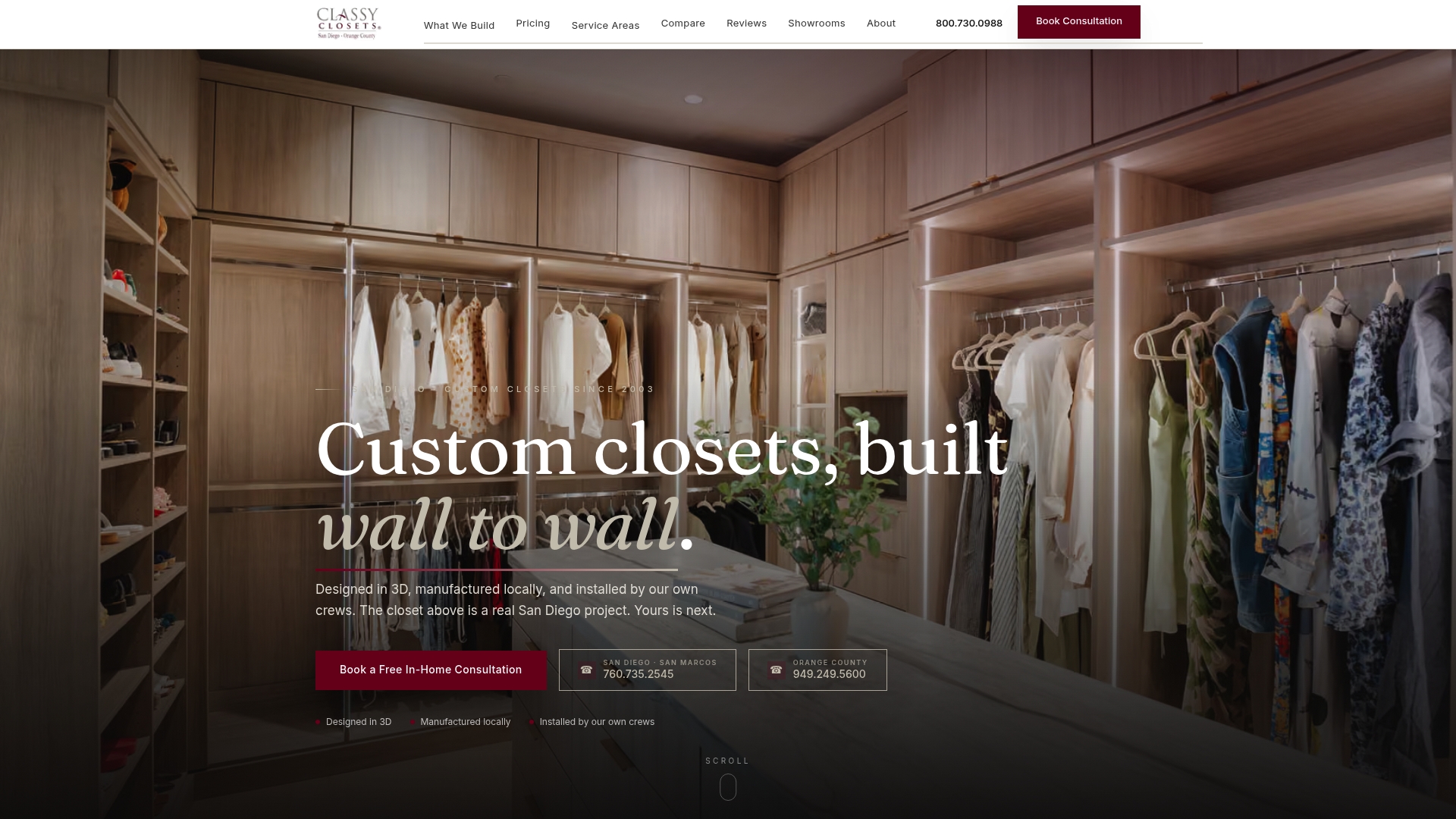
Installation is handled by an in-house crew to ensure connection between measurement and construction, rather than subcontracting to external parties. Projects include workmanship warranty coverage, and pricing is itemized up front so you know what you are paying for before work begins.
- Free in-home consultation and 3D design before you commit to anything.
- Locally manufactured cabinetry built to your exact measurements, not a standard retail size.
- Installation handled by our own crew, backed by a 10-year workmanship warranty.
If you are planning a home office built-in with integrated filing, or a broader custom closet or storage project, reach out for a free quote and we will measure, design, and build around the space you actually have.
FAQ
What are the standard dimensions for file drawers?
Standard letter-size file drawers provide an inside clear dimension of about 10 1/4" height by 12 1/4" width by 24" depth, per federal specification AA-F-358. Legal-size drawers share the same height and depth but widen to about 15 1/4" to accommodate legal folders.
What are the typical dimensions of an office filing cabinet?
Overall cabinet dimensions typically range from about 17 5/8" wide by 28" deep for vertical files, with height varying from roughly 30 5/8" for a 2-drawer model to 58 1/2" for a 5-drawer model, according to the AA-F-358J federal specification. Lateral cabinets instead run 30" to 36" wide with shallower depths of 18" to 24".
What is a good pull-out file drawer for a cabinet?
A good pull-out file drawer insert matches the inside depth of your existing cabinet, ideally close to the 24" hang depth that standard hanging folders need. Depths vary by model and manufacturer, so check the specific product’s measurements against your cabinet’s inside clearance before assuming it will fit.
How deep should a file drawer be for legal versus letter folders?
Both letter and legal hanging folders generally need about 24" of inside drawer depth to hang properly without buckling, based on federal filing cabinet dimensions. The main difference between the two folder types is inside width, not depth, with legal folders needing roughly 15 1/4" versus 12 1/4" for letter.
Do custom-built filing cabinets follow the same dimension standards?
Custom cabinetry is not bound by the federal minimums used in commercial procurement, since it is built to the exact measurements of your space and folder needs. A custom design process typically starts with an in-home measurement and 3D layout so folder clearances and overall footprint are confirmed before manufacturing begins.
Sources
- CLASS 6 – LETTER SIZE (Federal Specification AA-F-358)
- FSC 7110 AA-F-358J federal filing cabinet specification
- Allsteel storage & casegoods filing dimension tables


